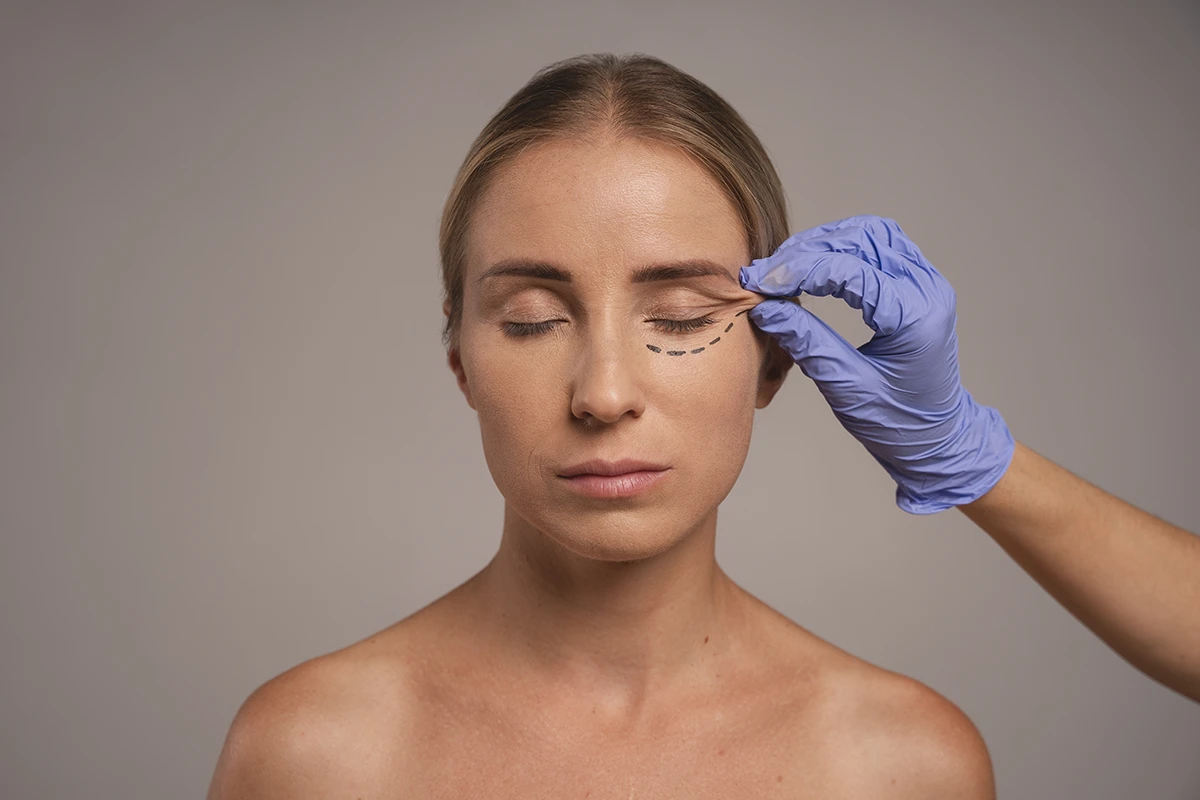
Eyelid surgery (blepharoplasty) in Istanbul at Aesthe Surgery addresses excess skin, puffiness or heaviness of the upper and lower eyelids that can make the face look tired even when you are rested. It can be performed on the upper lids, the lower lids or both, and is often considered together with other facial rejuvenation procedures.
In some people, heavy upper eyelid skin can also narrow the field of vision. Whether this applies to you, and which approach suits your eyes, is assessed during an examination by the surgeon.
| Duration | 1 – 2 hours |
|---|---|
| Anaesthesia | Sedation with local, or general |
| Hospital stay | Same day |
| Return to daily life | 7 – 10 days |
The times above are averages and vary from person to person.
The surgeon examines the eyelid skin, the position of the brows, the fat pads around the eyes and the shape of the eye. For the upper eyelids, the incision is usually placed in the natural crease so that the scar is hidden when the eyes are open.
For the lower eyelids, the approach depends on what needs to be corrected: excess fat, excess skin or both. Removing or repositioning skin, muscle and fat is planned individually to keep a natural look and the character of your eyes.
The timeline below shows an average course. Your personal recovery depends on your age, skin quality, smoking and the extent of the operation.
Source of the figures: treatment information approved by our surgeon (droyur.com).
As with any surgery, eyelid surgery carries risks, including bleeding, infection, temporary dry or irritated eyes, asymmetry, visible scarring, temporary difficulty closing the eyes and, occasionally, the need for a revision. Your surgeon will discuss these with you in detail.
Upper eyelid scars are placed in the natural crease and usually become hard to see over time. For the lower eyelids, the approach is chosen to keep scars as discreet as possible.
Yes, both can be treated in the same operation if needed. The plan is made after examining both areas.
The aim is a fresher look while keeping the natural character of your eyes. If you want to change the shape of the eye itself, this is a different procedure and is discussed separately.
It is often combined with facial rejuvenation such as a facelift or brow lift. Whether a combination is suitable for you is decided at the consultation.
You may also want to read about facelift and rhinoplasty.
This page is for general information and does not replace a medical consultation. Suitability, the technique to be used and the possible risks can only be determined after an examination by the surgeon. Recovery times vary from person to person. In line with Turkish regulations on healthcare advertising, we do not publish prices, promotions or before-and-after images.
Book a consultation: call or message us on WhatsApp at +90 544 919 17 37 (Monday–Friday, 10:00–19:00) or use the contact form on this page. Consultations and patient coordination are available in English, German, Russian and Turkish. International patients can start with a video consultation.
We provide advanced aesthetic and plastic surgery services designed to enhance your natural beauty and confidence.